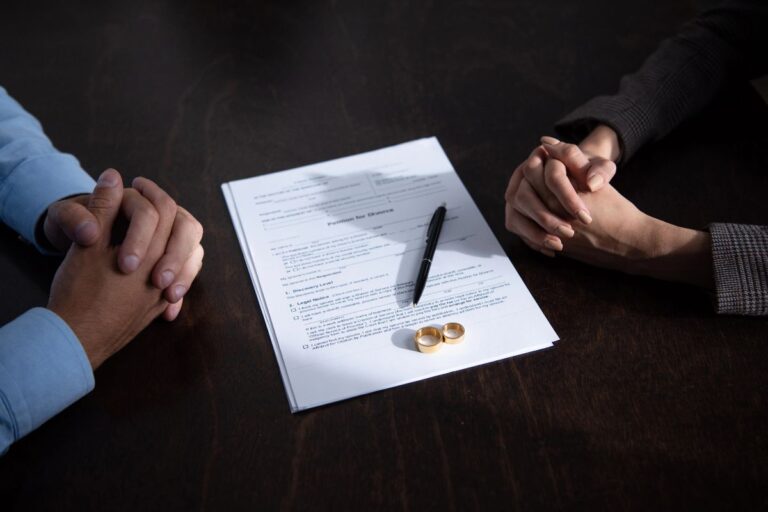
Quick answer: Yes. In the UK, pensions are usually treated as part of the finances considered in a divorce settlement, and an ex-partner can receive a share if it’s agreed as part of the settlement or ordered by the court (most commonly via a pension sharing order). But there’s no automatic rule that they get half, it depends on your circumstances.
When you’re separating or divorcing, it can feel like every part of your life is suddenly under the microscope: your home, your children, your finances… and yes, your pension. The idea that an ex-partner might be entitled to a share of your pension can come as a shock, especially if it’s something you’ve spent years paying into to give you security later on.
Whilst your ex-partner may have a claim on your pension, they won’t automatically receive half of it. The outcome depends on the individual circumstances surrounding your divorce and your finances.
UK note: Divorce rules and processes can vary across England & Wales, Scotland and Northern Ireland, so it’s always worth getting advice specific to your area and situation.
Important: This article is general information, not legal advice.
If you’re going through a rough split and your stress levels are already sky-high, you might find this helpful alongside the practical stuff: How to deal with a nasty divorce and survive.
Let’s look at what this means in real life and what options may be available.
Why pensions matter so much in divorce
For many people, a pension is one of their biggest assets and it can sometimes be more valuable than the family home. It can also feel very personal, because it’s often something you’ve built up quietly in the background for years, which is why it can become a point of contention during a divorce.
Pensions are usually treated as part of the matrimonial finances considered during financial negotiations. The aim is fairness, not punishment and “fair” looks different for every family depending on their circumstances.

Before you agree to anything: get the pension values (this is key)
Before anyone starts discussing who gets what, you need to know what you’re actually dealing with.
- Ask each pension provider for a Cash Equivalent Transfer Value (CETV).
- If you’ve had more than one job (most of us have), you may have multiple pension pots, so get a value for each one.
- Some pensions can be more complex to value (for example certain public sector or final salary/defined benefit schemes), which is why it can help to get proper advice before making decisions.
This step might not be exciting… but it stops “vibes-based negotiating” and helps you make decisions based on real figures.
What types of pensions can be shared?
Most pensions can be included in a financial settlement, including:
- Workplace pensions
- Private pensions
- Personal retirement plans
- Public sector pensions (such as NHS or teaching pensions)
Each scheme has different rules, which is why getting specialist legal advice is so important before either party agrees to anything.
How can pensions be divided?
There are three main ways pensions are dealt with during divorce:
1) Pension sharing order
This is the most common option. A percentage of one person’s pension is transferred into a pension in the other person’s name. Both people then have their own, separate pension pots.
2) Pension offsetting
This is where one person keeps their pension and the other receives a larger share of something else (for example, equity in the home or savings) to balance things out. An accurate pension value is essential here, because pensions don’t always translate neatly into “cash now”.
3) Pension attachment (earmarking)
This means one person receives a portion of the pension income when the other retires. This is less common these days because it can tie the two of you together financially for many years and the timing of when the pension is taken can be controlled by one party.
Will my ex automatically get half of my pension?
No. While the aim of a settlement is fairness, there is no automatic 50/50 rule for pensions.
The court looks at many factors, including:
- The length of the marriage
- Each person’s income and future earning potential
- The parties’ ages
- The parties’ needs upon retirement
- When the pension fund was accrued
- What other assets are available
What if I built my pension before the relationship?
This is a very common question. While pensions built up before the marriage can still be considered, they may be treated differently, especially in shorter relationships.
What about small pensions?
Even modest pensions are included. Quite often, a person may have more than one pension fund because they’ve changed employer more than once. This means the total value of all pension funds will usually be considered when assessing what a fair outcome would look like.
Mini FAQ: pension sharing on divorce
Do we need a court order to make it official?
If you want the agreement to be properly protected, it usually needs to be recorded in a formal financial order. A friendly agreement is great, but you want it legally secure.
How is a pension actually split?
Most commonly through a pension sharing order, which creates two separate pension pots. Offsetting and attachment/earmarking exist too, but pension sharing is often the cleanest “separate lives” approach.
What if I have more than one pension?
Very common. It’s worth doing a full sweep of old workplace pensions so nothing is missed, and so the settlement is based on the full picture.
Should I update my pension beneficiaries after divorce?
Yes, once things are final, review your pension nomination/beneficiaries (“expression of wish”) so it reflects what you want now.
What should you do next?
Seek legal advice before you reach an agreement regarding financial matters, especially when pensions form part of the financial settlement between you. Understanding your rights and your options puts you in a much stronger position to move forward with confidence and clarity.
And if you’re trying to get your finances feeling a bit more under control while everything else is chaotic, these might help:
