
To choose a good dog boarding kennel, check the licence, visit the facilities, ask about exercise and feeding routines and find out exactly what happens if your dog becomes ill. You should also check vaccination requirements, staffing, sleeping arrangements and how dogs are monitored during their stay.
Do not choose purely on price or online reviews. The best kennel is one where your dog will be safe, comfortable and cared for by people who understand their individual needs.
1. Is the dog boarding kennel licensed?
If you are in England, commercial dog boarding kennels operating as a business generally need a local authority licence.
The licence should be clearly displayed at the premises, while the licence holder’s name and licence number should also appear on the business website.
It is also worth checking the kennel’s star rating. Licensed animal businesses in England can receive a rating from one to five stars, with businesses meeting the defined higher welfare standards able to achieve four or five stars.
You can read the current GOV.UK guidance on dog boarding licences if you want to check the requirements yourself.
Rules differ outside England, so check the licensing requirements where you live.
2. Can you visit the kennel before booking?
Ideally, yes.
A visit gives you a much better idea of cleanliness, security, noise levels, sleeping areas and how staff interact with the dogs.
You should feel comfortable asking to see where your dog will actually stay rather than simply viewing the reception area.
A good kennel should be happy to explain how dogs are housed, exercised, fed and monitored.

3. Where will your dog sleep?
Ask exactly where your dog will sleep and whether they will share a kennel unit.
In licensed kennels in England, only dogs from the same household may share a kennel unit and the owner must give written permission.
Your dog should also have enough room to stand, turn around, stretch out and sleep comfortably.
If your dog is nervous around others or prefers a quieter environment, tell the kennel before booking.
4. How much exercise will your dog get?
Do not assume that a large kennel automatically means lots of walks.
Ask:
- how many walks dogs receive
- how long exercise sessions usually last
- whether there is secure outdoor space
- whether dogs are exercised individually or together
- what happens in bad weather
Licensed kennels in England must provide appropriate daily exercise away from the kennel unit unless veterinary advice says otherwise.
Higher-standard kennels have stricter exercise and enrichment requirements, so it is worth asking exactly what a typical day looks like.
5. How much human interaction will there be?
Exercise is only part of the day.
Ask how often staff spend time playing with, grooming or simply interacting with the dogs.
This is especially important for sociable dogs that are used to being around people throughout the day.
Staff should also be monitoring behaviour and looking for signs of fear, stress, aggression or illness.
6. What vaccinations does your dog need?
Check vaccination requirements early rather than discovering them the day before your holiday.
Licensed kennels in England must check current vaccination records. Required vaccinations include protection against diseases such as parvovirus, distemper, infectious canine hepatitis and leptospirosis, while additional vaccinations such as kennel cough may also be required.
Primary vaccination courses must be completed at least two weeks before a dog is accepted for boarding, so do not leave this until the last minute.
Ask the individual kennel exactly what paperwork and vaccinations they require when you first enquire.
7. Will they follow your dog’s normal feeding routine?
Suddenly changing food can upset some dogs.
Ask whether you should supply your dog’s usual food and whether the kennel can follow specific quantities and feeding times.
Tell staff about allergies, intolerances and anything your dog absolutely refuses to eat. Every dog has standards, apparently.
In licensed kennels, the dog’s diet should be agreed with the owner and food intake should be monitored.
8. Can staff give medication?
If your dog takes regular medication, confirm that staff can administer it correctly.
Provide written instructions covering the dose, timing and what to do if a dose is missed.
For dogs with more complex medical needs, speak to your vet before booking and make sure the kennel is comfortable managing those requirements.
9. What happens if your dog becomes ill?
A good kennel should have a clear veterinary emergency procedure.
Ask which veterinary practice they use, when they would contact you and who can authorise treatment if you cannot be reached.
Leave your own vet’s details and at least one emergency contact.
Licensed kennels must have arrangements for veterinary care and sick or injured dogs must receive prompt attention.
10. How are nervous or anxious dogs handled?
Dogs react differently to boarding.
Ask what staff do if a dog refuses food, hides, becomes distressed or struggles around other animals.
Licensed kennels should monitor behaviour every day and act when dogs show signs of stress, fear or aggression.
The RSPCA’s advice on choosing boarding kennels also recommends checking the environment, exercise arrangements, sleeping areas and how behaviour is monitored.
If your dog is particularly anxious, ask whether a trial stay is possible before committing to a longer booking.
11. What do you need to bring?
Ask the kennel for a packing list before the stay.
Depending on the business, you may need:
- food
- medication
- vaccination records
- emergency contact details
- vet details
- familiar bedding or comfort items
If the kennel allows familiar items, a blanket carrying smells from home may help some dogs settle.
If you’re arranging boarding because you’re heading abroad, our family trip abroad checklist can help you sort the rest of the pre-holiday admin too.
12. What happens on the first day?
Ask how dogs are introduced to the environment and whether trial stays are available.
A short daycare session or overnight trial can be particularly useful before a longer holiday.
It also gives you a chance to see how your dog behaves when they come home and whether they seem comfortable returning.
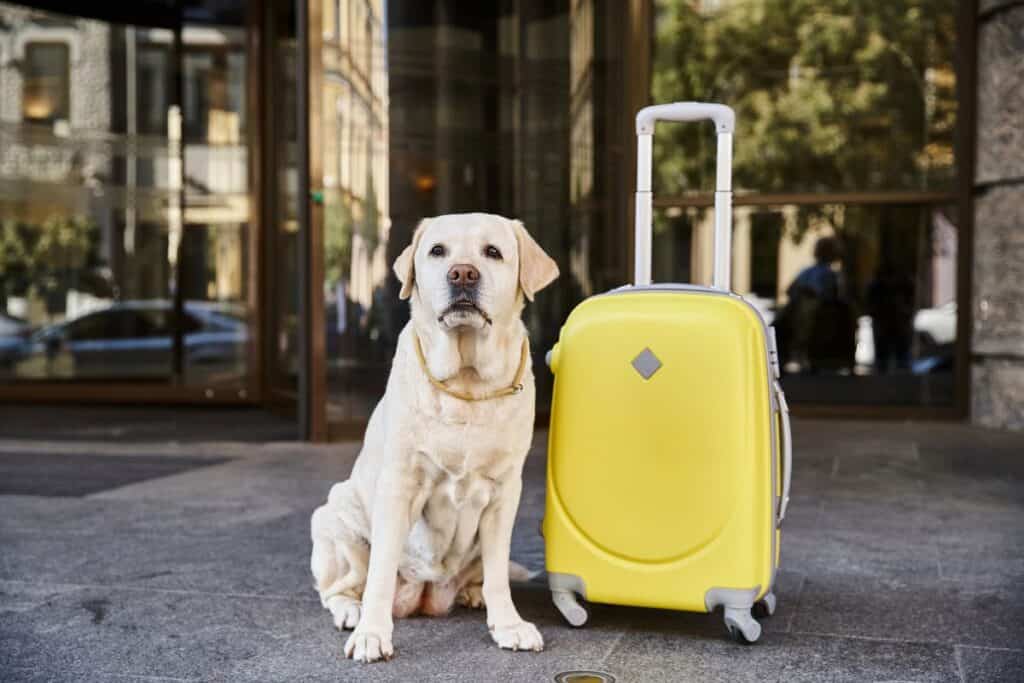
Kennel boarding or taking your dog on holiday?
Boarding is not the only option.
Some dogs cope brilliantly in kennels, while others may be happier with home boarding, a pet sitter or travelling with you.
If you’re considering a UK break instead, several of these unusual places to stay in Devon have dog-friendly accommodation options worth checking.
The right choice depends on your dog’s temperament, health, routine and how comfortable they are in unfamiliar environments.
What are the red flags when choosing a dog kennel?
Consider looking elsewhere if a kennel:
- cannot provide clear licensing details
- is reluctant to let you see where dogs stay
- cannot explain its exercise or feeding routines
- has no clear veterinary emergency procedure
- seems dirty, insecure or poorly maintained
- dismisses questions about your dog’s behaviour, health or medication
A reputable kennel should be comfortable answering detailed questions about how your dog will be cared for.
How do you know if a dog boarding kennel is good?
A good dog boarding kennel should be licensed where required, clean, secure and transparent about how your dog will be cared for.
Staff should be able to explain exercise, feeding, medication, vaccinations, behaviour monitoring and emergency procedures without making you feel awkward for asking.
Most importantly, trust what you see during a visit.
Fancy branding and glowing reviews are useful, but knowing exactly where your dog will sleep and who will be caring for them matters far more.
