
Most people obsess over tiles and brassware, but the real make-or-break in a walk-in shower is the bit no one talks about: choosing a shower drain that actually matches the way your bathroom is built.
Get it right and water flows away fast, floors stay dry and your grout doesn’t start looking tired after six months. Get it wrong and you’re dealing with puddles, damp patches and a shower that never quite feels “finished”.
This guide walks you through what to look for, the different types of drains and when you need something more than the basic off-the-shelf option.

1. Choose a Wet-Room Ready Drain First
If you’re going for a walk-in or fully tiled, level-access shower, you need a drain that’s designed for that setup. A standard basic grate won’t do the job because it’s not built to move water off a flat, tiled floor fast enough.
This is where choosing shower drains from Wetroom Design makes sense. It’s designed for tiled wet rooms, works with waterproofing systems and comes with covers you can actually lift and clean. That means:
- water drains away quickly (even with a rainfall head)
- the finish sits flush with your tiles
- you don’t have to ruin the look with a plastic centre grate
- maintenance is simple, which stops smells and blockages
If you love the whole “spa at home” look, check out our easy ways to turn your home into a stylish escape for more inspiration.
2. What Actually Makes a “Modern” Shower Drain?
A modern drain isn’t just a hole in the floor. It should be:
- low profile so it works with level-access showers
- high flow so it can match the output of your shower
- tile-friendly so you can run large-format tiles right up to it
- easy to access so you can clear hair and soap in seconds
- nice to look at (or invisible) so it doesn’t spoil the design
This is the bit people don’t get told in showrooms: in a walk-in shower, the floor is doing the job of the tray. If water can’t find the drain easily, it spreads. Once it spreads, you get standing water, dark grout lines and the “why is my new shower always wet?” problem.
3. Linear vs Central Drains
Linear drains
- perfect for walk-ins and wet rooms
- let you create one gentle slope, so the floor still looks flat
- can sit against the wall so they practically disappear
- work brilliantly with big porcelain or stone-look tiles
Central (point) drains
- better for smaller showers or tray replacements
- more familiar, but they need the floor to slope in from all sides
- can make tiling trickier with larger tiles
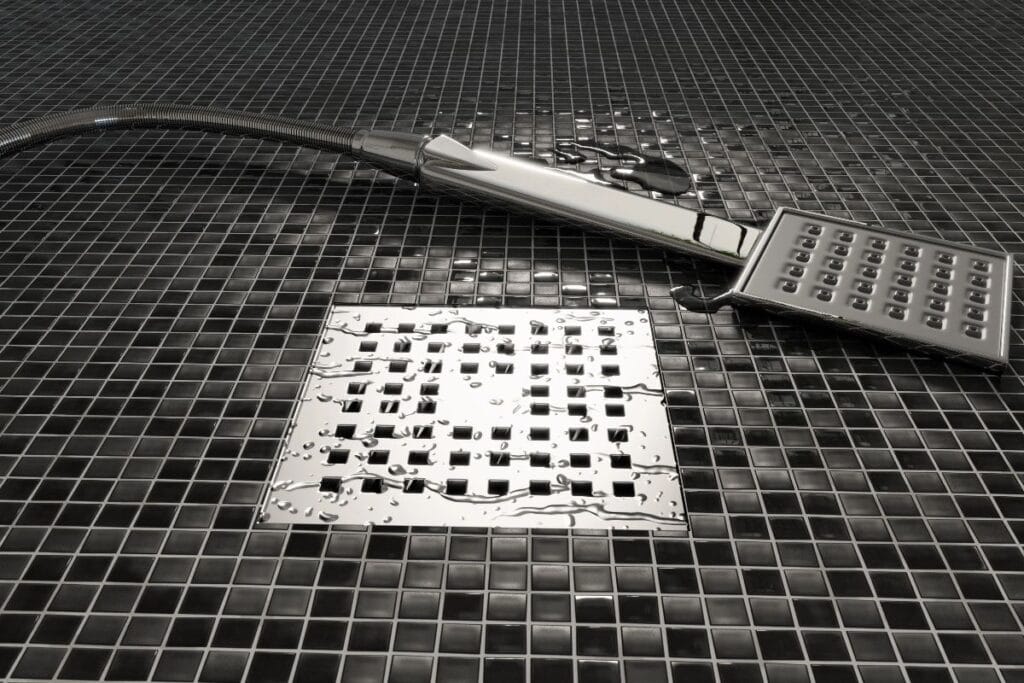
4. Get the Flow Rate Right
Showers today can throw out 15–20 litres per minute. Your drain has to be able to move that, with the cover on.
Before you buy:
- check how much water your shower puts out
- check the tested flow rate of the drain
- make sure the waste route isn’t full of tight bends
- make sure you have the floor depth for the right trap
If you don’t do this, you get pooling near the entrance of the shower. Find out what to do when water won’t drain down your sink, to help get water flowing again.
5. The Floor Fall Has to Be Right
You can buy the best drain and it still won’t work if the floor isn’t sloped properly.
You need:
- a consistent fall from the shower area to the drain
- the drain level with the finished tile
- proper waterproofing underneath
- no “dips” caused by bad screed or uneven large tiles
This is why wet rooms should be installed by someone who actually specialises in designing wet rooms.
6. Make the Drain Part of the Design
If you’ve spent money on brassware, lighting and tiles, don’t finish it with a cheap chrome grate.
You can:
- pick tile-in drains so the floor looks continuous
- match the finish to your taps
- run the drain against the wall so it’s barely visible
- choose a cover you can lift easily so cleaning doesn’t become a drama
7. Safety, Family Use and Healthy Homes
A low-profile, properly specced drain isn’t just about looks. It:
- removes the step for kids and older relatives
- stops water escaping into the rest of the bathroom
- protects the subfloor from long-term moisture
- makes the space easier to clean
All important considerations when looking to create a healthy home environment for your family.
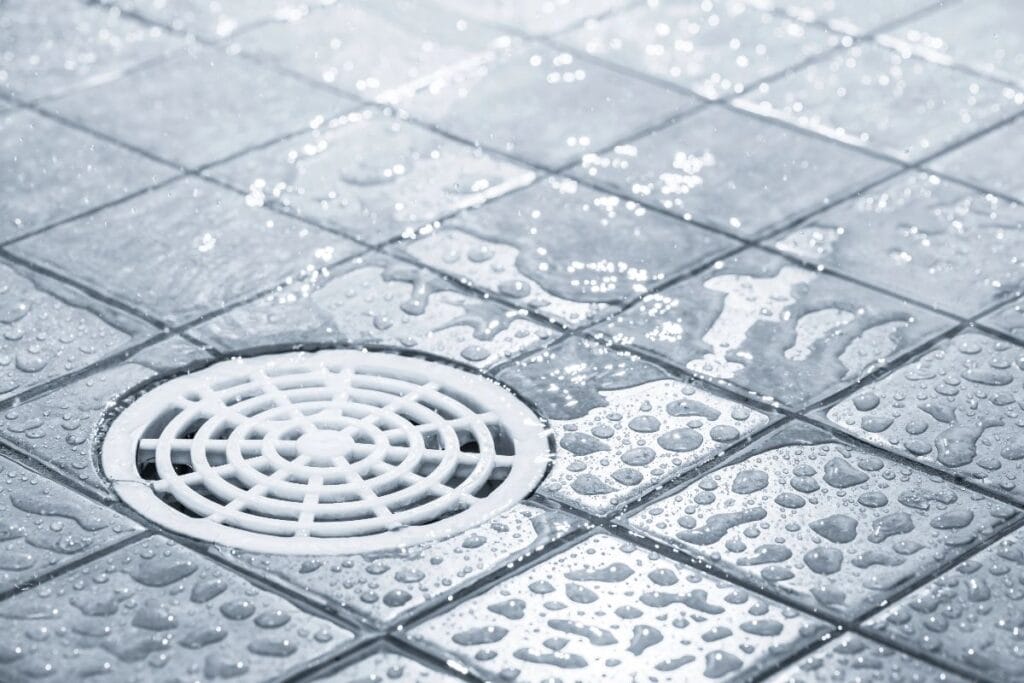
8. Common Shower Drain Problems (and Fixes)
“Water is pooling near the door.”
Check fall and flow. You may need to increase the slope or switch to a higher-flow drain.
“My new shower smells.”
Clean the trap. This is why easy-lift covers matter. Find out why small home improvements make a huge difference – regular tiny fixes, big payoff.
“Tiles are cracking around the drain.”
Usually an install/support issue, not the drain itself.
“Grout keeps going black around the shower.”
Water is sitting too long. Improve the fall, improve ventilation and make sure the drain isn’t partially blocked.
9. Can You Retrofit a Better Drain?
In a lot of cases, yes.
- if you’re retiling, swap to a linear or tile-in model
- if you already have a tiled wet room, some drains can be replaced like-for-like
- if you’re replacing an old tray, that’s the time to upgrade the drainage too
10. What Should You Spend?
Match the drain to the standard of the bathroom.
- basic tray + standard shower → standard drain is fine
- fully tiled walk-in → go for a wet-room ready linear
- design-led, high-use family bathroom → spend on a quality stainless or tile-in model
If you’re already investing in the fabric of the home (windows, heating, insulation), it makes sense to get the wet areas right too. Which is where best ways to save energy with insulation comes in handy for anyone doing a whole-house upgrade.
Why Choosing a Shower Drain is an Important Task
A good shower isn’t just about water pressure, it’s about where the water goes. If the drain is right, the floor is sloped properly and the cover is easy to clean, the shower will look new for longer, won’t smell, won’t flood and won’t drive you mad.
That’s the real luxury: a bathroom that looks good and actually works.
