
Brits and Americans share a language. Sort of. Until a Brit compliments your trousers, asks if you fancy a brew or calls someone a wally and suddenly everyone needs subtitles.
Here are 30 British slang words that confuse Americans, what they actually mean and the moments where they’re most likely to trip you up.
Quick cheat sheet: 10 British words most likely to confuse an American
These are the 10 biggest offenders, the British words most likely to confuse an American in everyday situations.
| British word | American meaning |
|---|---|
| Pants | Underwear |
| Trousers | Pants |
| Jumper | Sweater |
| Rubber | Eraser |
| Trolley | Shopping cart |
| Boot | Trunk (of a car) |
| Bonnet | Hood (of a car) |
| Flat | Apartment |
| Brew | Cup of tea |
| Tea | Dinner / evening meal |
The full 30 are below, with examples of how Brits actually use them.
What counts as British slang in this article?
In this post, I’m using “British slang” the way most people search for it, a mix of informal British words, everyday UK phrases and British English terms that often confuse Americans. Some are technically slang, some are just British vocabulary that doesn’t exist in the US. Either way, they can all trip up an American visitor.
It’s also worth knowing that British slang varies significantly by region, Northern, Cockney, Geordie, Scouse and Scottish slang all have their own distinct words and rhythms, but many slang terms are now used UK-wide.
British words that mean something completely different in American English
These are the worst offenders. Americans hear them, assume they understand them and then look very confused indeed.
1) Pants In the UK, pants means underwear. In the US, pants means trousers. So when an American compliments a Brit’s “nice pants,” they’re admiring the trousers, but the Brit has just heard a comment about their underwear. This is the single biggest transatlantic wardrobe mix-up there is. And just to add another layer, in some parts of the UK, calling something “pants” means it’s rubbish. “That film was pants” has nothing to do with trousers OR underwear. It just means it was awful.
2) Trousers What Americans call pants. So when a Brit says “lovely trousers,” they mean the thing covering your legs. We promise.
3) Jumper A knitted sweater. Not, as one American visitor once asked me, “a little dress thing for toddlers.” A jumper is what you put on when it’s chilly and given the British weather, that’s roughly eleven months of the year.
4) Vest An undershirt, the thin sleeveless thing you wear under everything else. In the US, a vest is what we’d call a waistcoat. So if a Brit says “pop a vest on under that,” they’re not suggesting formalwear.
5) Braces In the UK, braces means both the things that hold up your trousers and the wires on your teeth. Same word, two completely different objects. Americans only use “braces” for teeth, the trouser version is called suspenders over there. Which is its own confusion, because in the UK suspenders mean something else entirely.
British words for parts of a car
6) Boot The trunk of a car. “Put it in the boot” doesn’t mean tuck it inside your shoe.
7) Bonnet The hood of a car. Yes, we have a boot and a bonnet, like the car is wearing a little outfit.
Other everyday British words Americans don’t recognise
8) Rubber An eraser. The thing on the end of a pencil. Every British school child who’s done a US exchange trip has a story about asking a horrified American classmate if they can borrow a rubber.
9) Trolley A shopping cart. Push it round the supermarket, fill it with things you didn’t go in for, queue at the till.
10) Lift An elevator. “Take the lift to the third floor” means get in the metal box, not physically lift anything.
11) Flat An apartment. Not a tyre, not a level surface, not a musical note, although context usually saves you on this one.
12) Queue A line. But also a national pastime, an unwritten code of conduct and the fastest way to spot a tourist (they’re the ones who didn’t realise there was one).
British slang words for food and drink
The slang words around eating and drinking trip Americans up constantly. For the food names themselves (chips, biscuits, crumpets and the rest), I’ve got a separate guide on British food names explained. Here are the slang-y ones to know.
13) Brew A cup of tea. Especially up here in the North West. “Fancy a brew?” is basically a love language. It can occasionally mean a pint of beer depending on context, but nine times out of ten you’re being offered tea.
14) Butty A sandwich. A bacon butty, a chip butty, a jam butty. Northern through and through and one of life’s great pleasures.
15) Bevvy A drink, usually alcoholic. “Going for a few bevvies” means heading to the pub.
16) Scoff To eat quickly, often with mild guilt attached. “I scoffed the lot” suggests a packet of biscuits met its end faster than planned.
17) Peckish A little bit hungry. Not starving, not famished, just enough to justify a snack.
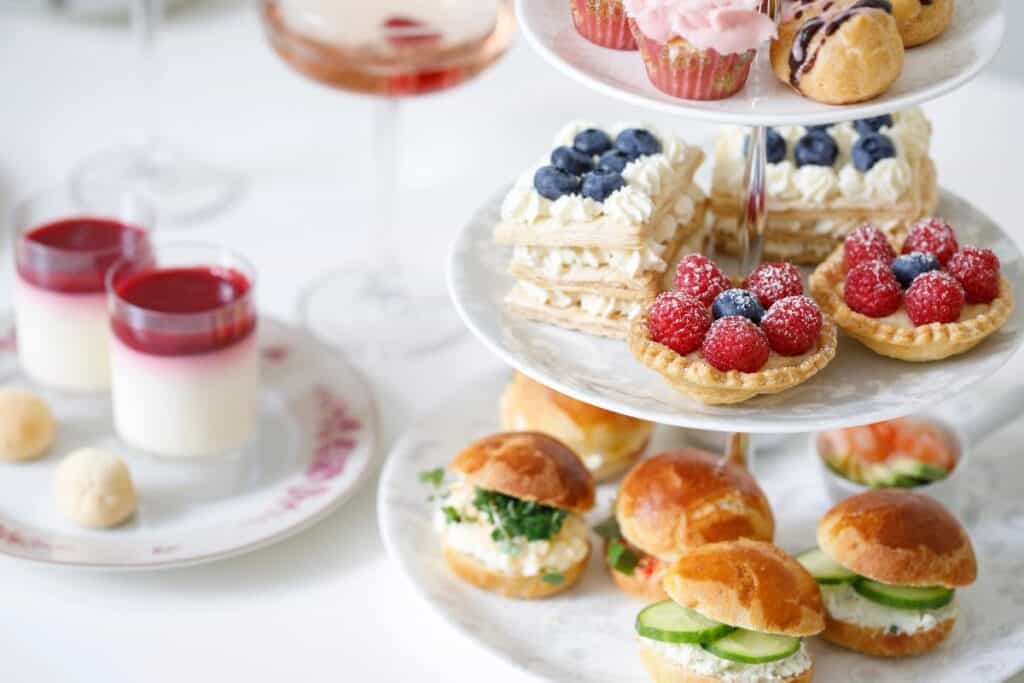
18) Tea This one trips Americans up more than any other. “Come round for tea at 5” doesn’t mean a cup of tea and a biscuit. It means dinner. The evening meal. Especially up north. Show up having eaten and you’ll cause great offence.
British slang words for people
19) Bloke A man. Just any old man. “Some bloke at the bus stop” is a perfectly normal British sentence.
20) Lad A young man or “the lads” as a group of male friends. Slightly affectionate, slightly cheeky.
21) Numpty A fool, but said with affection. You’d call your husband a numpty for putting the milk in the cupboard, but you wouldn’t call your boss one.
22) Muppet An idiot, fondly. “Don’t be such a muppet.” Inspired by the Jim Henson lot, but used very differently here.
23) Lush Lovely, gorgeous, delightful. “That cake is lush.” Confusing for Americans because in the US, a lush is someone who drinks too much. So “your garden is lush” can land in two completely different ways.
24) Cheeky Playfully bold or a bit naughty. A cheeky pint is one you weren’t planning to have but absolutely will. The cheeky child is one who answered back. A cheeky Nando’s is… well, a national institution.
25) Posh Upper-class. Fancy. Speaks like the royal family. Drinks tea with the proper finger position. Often used with a slight eye-roll.
British slang words Americans have never heard before
26) Skint Broke. Out of money. “I’m skint till payday” is heard across the country roughly weekly.
27) Chuffed Pleased, delighted. “I’m dead chuffed with that” means you’re absolutely thrilled. Nothing to do with steam trains, despite the noise.
28) Kerfuffle A fuss or commotion. “There was a right kerfuffle at the school gates this morning.” Possibly the most British word on this list.
29) Naff Tacky, uncool, a bit rubbish. “Those curtains are a bit naff” is a polite way of saying they’re awful.
30) Wonky Lopsided, not quite right. A wonky shelf, a wonky eye, a wonky internet connection. If something’s not straight or not working properly, it’s wonky.
What does “I’ll knock you up in the morning” mean in British English?
To a Brit, “I’ll knock you up in the morning” simply means “I’ll knock on your door to wake you up.” It’s a completely innocent offer, usually made by a hotel landlady or a thoughtful host.
It’s a slightly old-fashioned phrase now, you’re more likely to hear it in older books, films, B&B settings or from older generations than from someone in their thirties at a Travelodge, but it’s still in use.
And to an American, it means something very different indeed, which is how more than one British host has accidentally horrified their American houseguest at breakfast. If you hear it, just smile, nod and say “lovely, thanks.” Nobody is suggesting anything untoward. We promise.
What is the most confusing British slang word for Americans?
The single most confusing British word for Americans is pants, which means underwear in the UK rather than trousers. Other top offenders include jumper (a knitted sweater in the UK, but a sleeveless dress in the US), rubber (an eraser, not a contraceptive) and fanny (a word that means something very different in the UK and should be avoided altogether).
Do British people still use this slang in everyday conversation?
Yes, most of these words are still used in everyday conversation across the UK, although some are more common in certain regions or age groups. Visit Britain for a week and you’ll almost certainly hear plenty of them, though “knock you up” and a couple of the older phrases are heard less often these days.
How British slang varies by region
One of the things Americans don’t realise is that British slang shifts dramatically depending on where you are in the UK. The same word can mean three different things across a 200-mile drive.
Northern England (Manchester, Yorkshire, Lancashire) This is my patch. Expect a lot of brew, butty, our kid, mardy, nowt, owt, mither and daft. Greetings are warm and direct, “you alright, love?” from a complete stranger is normal and lovely.
Cockney (East London) Famous for rhyming slang where the rhyme gets dropped halfway through, leaving Americans utterly stumped. “Use your loaf” means use your head (loaf of bread = head). “Have a butcher’s” means have a look (butcher’s hook = look). Genuinely impossible to follow without a translator.
Geordie (Newcastle) A dialect of its own. Howay, canny, hinny, bairn, gan, pet. If you’ve ever watched Geordie Shore and wondered what anyone was saying, you’re not alone, even other Brits struggle.
Scouse (Liverpool) Boss, sound, made up, devo’d, la. Said at speed and with rhythm. Hard to mimic, easy to love.
Scottish A whole separate adventure. Wee, bonnie, ken, aye, scunnered. Worth a post all to itself, honestly.
If you’re visiting more than one part of the UK, just know that what works in London might not work in Glasgow and vice versa.
How to use British slang without sounding like a tourist
Here’s the bit nobody tells you. Knowing the words is one thing, using them naturally is another. A few honest pointers:
Don’t try to do a British accent. Just say the words in your normal voice. Brits find it charming when Americans use our slang; we find it excruciating when they attempt the accent. Please just don’t!
Match the tone, not the volume. British slang is often understated and dry. Saying “I’m dead chuffed” loudly and brightly sounds wrong. Said quietly with a small smile, it sounds spot-on.
Start with one word at a time. Drop chuffed into a conversation. Then cheeky. Then maybe skint, if payday has betrayed you. Pile six in at once and you sound like you’re auditioning for EastEnders.
Read the room. Numpty is fine with friends, weird with your boss. Lush sounds completely natural in some parts of the UK and slightly odd in others, which is half the fun.
When in doubt, ask. Brits will happily explain, we love it when people are curious about our weird little language quirks. We just don’t love it when people fake it.
Why Brits don’t always say what they mean
Even when you’ve learned every word on this list, Brits often still don’t say what they mean. “Not bad” can mean excellent. “Interesting” can mean terrible. “I might pop along” can mean absolutely anything.
That’s a whole separate skill and I’ve broken it down in my British understatement translator, which is honestly the post I wish I could hand to every American visitor at the airport.
If you’re after the phrases version of this guide rather than individual words, head over to funny British sayings, a proper sister post to this one.
And if you’re actually planning a move, things to know before moving to England and British etiquette rules people don’t see coming are both required reading. Honestly. The etiquette one will save you more than once.
Frequently asked questions about British slang
Is British slang the same across the whole UK? Not even close. There’s huge regional variation between Scotland, Wales, Northern Ireland and the different parts of England. London slang and Manchester slang share some words but have their own distinct flavours.
Will I sound silly using British slang as an American? Only if you fake an accent or pile too many in at once. Used naturally and sparingly, British slang sounds friendly and engaged, Brits genuinely appreciate the effort.
What’s the difference between British slang and Cockney rhyming slang? British slang is the everyday informal language across the UK. Cockney rhyming slang is a specific tradition from East London where a phrase rhymes with the word it replaces and then often gets shortened so the rhyme disappears entirely, which is why it’s so hard to follow.
Are any British slang words rude that Americans wouldn’t realise? A few and I’ve kept this guide clean on purpose. The main one to know: don’t ever use the word “fanny” in the UK. It does not mean what it means in the US. Trust me on this!
What does “you alright?” mean as a British greeting? “You alright?” is the standard British casual hello, it’s not actually a question about your wellbeing. The correct response is “yeah, you?” rather than a detailed update on how you’re feeling.
So, which of these has caught you out? And which one are you absolutely stealing for your next trip to the supermarket? Let me know in the comments.
For more like this, the full British Life & Culture collection is well worth checking out.

This was such a brilliant read. I’ve always been curious about certain British expressions, and having you decode them was both helpful and fascinating. It’s amazing how a single word can have such a different life over there. Thanks for sharing these!
Visiting today from SSPS
Thank you so much Paula! 🙂 There are some real clangers in there that can create a LOT of confusion! Hopefully this has helped – thank you so much for your comment! 🙂 x
This is fascinating! Great post. I’ve always thought “we speak the same language,” Brits and Americans, but I spent a few days in England last fall and realized that’s not exactly the case. We’d get on a road and I’d see a “dual carriageway” sign and have no idea what it was talking about. I know what “dual” means, and I could assume that a carriageway is a road, but I had no idea what it meant. After a day or two, I realized, “Oh! It’s a divided highway.” 🙂 Visiting from the Senior Salon Pit Stop link party.
I love this Jennifer, thank you so much for your comment! I didn’t realise you have divided highway’s in the US – just the same as our dual carriageway! I hope you had a fabulous time when you visited and hope you come back to England soon… maybe when the sun is shining! 🙂 x
Thanks for this post Sim. I loved learning about British Slang and how our American English might be confusing to Brits and vice versa. Saw this post at SSPS#409. I’m there too( Posts #64 thru 68). Happy May and be well. Nancy Andres @ Colors 4 Health.
Thank you so much Nancy, and for your comment! It can be funny, but sometimes a tad disappointing too… in England chips are fries, chunky fries… we ask for chips anywhere else and we are given crisps (Lays/Walkers)! Being prepared can certainly bypass any of that! Will bob over to your posts!x