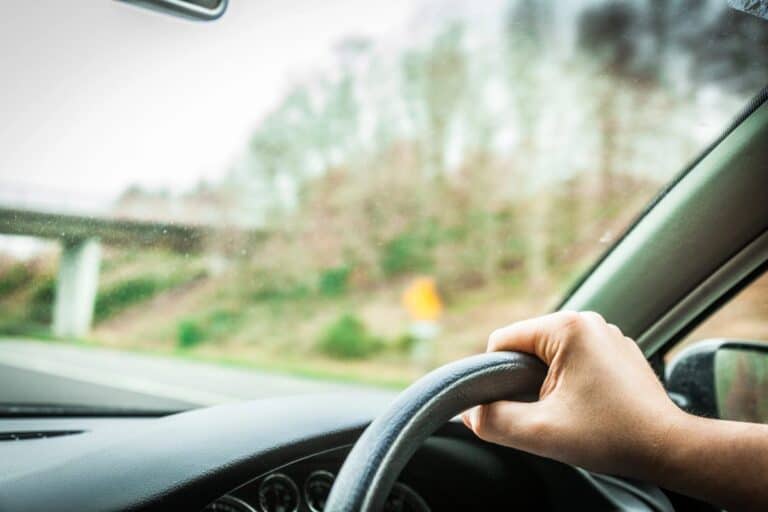
Driving in the UK for the first time is mainly a brain rewire – left-hand driving, roundabouts, narrow roads and parking can feel like a learning curve, but it’s absolutely doable.
Most mistakes aren’t dramatic, it’s the little stuff: picking the right lane on a roundabout, decoding the national speed limit sign and meeting a road that’s suddenly one lane because everyone’s parked wherever they fancy.
UK drivers are generally pretty courteous… unless you queue-jump. Then you’ll be silently judged for life! New to the UK in general? Start here too: Americans moving to England: 8 things to know before you move.
Right, let’s get you from A to B without accidentally doing a lap of Manchester because you missed an exit.
UK driving basics in 30 seconds (save this)
🚗 Drive on the left (and keep the centre line on your right)
🔄 Roundabouts: give way to the right and signal when exiting
📏 Speed limits are in mph (watch for variable motorway signs)
🛣️ Motorways: keep left unless overtaking
🟡 Yellow lines = parking restrictions (double yellow = no waiting any time)
🔁 Missed an exit or lane? Go around again – it’s normal and safer than panicking
1) The biggest difference isn’t the left-hand side… it’s the habits
Yes, you’ll be driving on the left. But the harder bit is muscle memory:
- Your instinct on quiet roads will be wrong for a week or two
- You’ll drift slightly until your brain accepts the new “centre”
- If you’re in a manual, your brain may briefly forget what hands are for
If you’re renting: book an automatic early if you don’t drive manual at home. Manual is still very common in the UK.
2) UK beeps are usually… communication, not rage
People aren’t generally horn-happy here. So when someone beeps, it’s often one of these:
- “Wake up, mate” (traffic light’s gone green)
- “Oi, what have you done?” (you’ve done something daft)
- “I’m here / careful” (rare, but it happens)
It’s not usually “I want to fight you.” It’s more “please engage brain.”
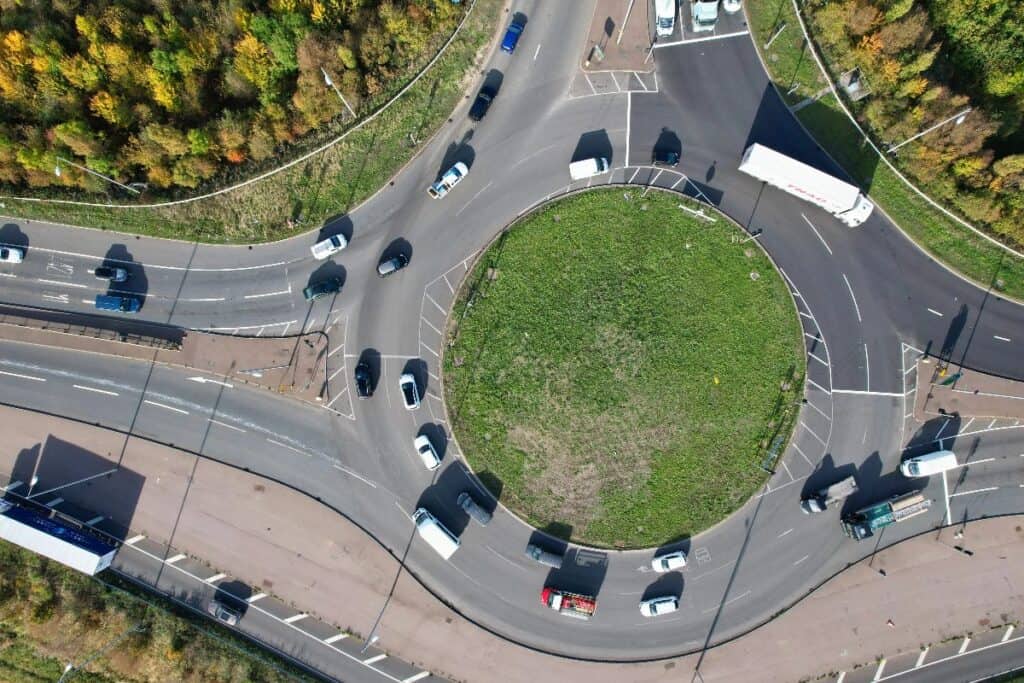
3) Roundabouts: give way to the right (and don’t panic)
Roundabouts are the thing most first-timers dread and honestly, once you’ve done a few, they’re fine.
Basic rule: give way to traffic coming from your right and already on the roundabout.
What helps:
- Follow lane arrows and road markings (don’t guess)
- Signal when exiting
- If you miss your exit… go around again. Nobody cares. It’s not a moral failure.
Mini-roundabouts: treat them like normal roundabouts, but smaller and faster and yes, you’re expected to go around the painted circle.
Roundabout lane cheat sheet (save your sanity)
- Taking the 1st exit (left)? Stay left lane, signal left as you approach.
- Going straight on (2nd exit)? Usually left lane (unless road markings say otherwise). Signal left after you pass the exit before yours.
- Turning right / last exit? Usually right lane (unless markings say otherwise). Signal right on approach, then left to exit.
- Spiral / multi-lane roundabouts: follow the painted arrows, they’re the boss.
- Missed your exit? Go around again. Calmly. No-one minds!
UK road manners (what people actually get annoyed about)
British driving etiquette is basically the same vibe as queuing: take turns, be predictable, don’t push in.
A few unwritten rules that’ll keep you out of trouble:
- Don’t queue-jump at merges. Zip-merge and take turns. People are usually courteous… until someone tries to force it.
- Indicate properly (especially at roundabouts). There’s a running joke that BMW drivers never use indicators, don’t become the punchline.
- Beeping is usually “wake up” or “oi, what are you doing?” It’s not normally aggressive, it’s just… British impatience in audio form.
- Middle-lane hogging on motorways is unpopular. Keep left unless overtaking.
- A thank-you wave is standard if someone lets you through on a narrow road. It’s basically a tiny road peace treaty.
4) “Queue jumpers” are not loved (especially at merges)
If two lanes merge into one:
- People expect zip merging (take turns)
- They do not love someone forcing in last minute like “I’m the main character”
Be polite, indicate and take your turn. You’ll get let in far more often than you expect.
5) Indicators matter (except, allegedly, if you drive a BMW!)
Use your indicators early and clearly:
- On roundabouts
- When pulling around parked cars
- When changing lanes on motorways
It makes everything smoother and instantly marks you as “not a menace.”
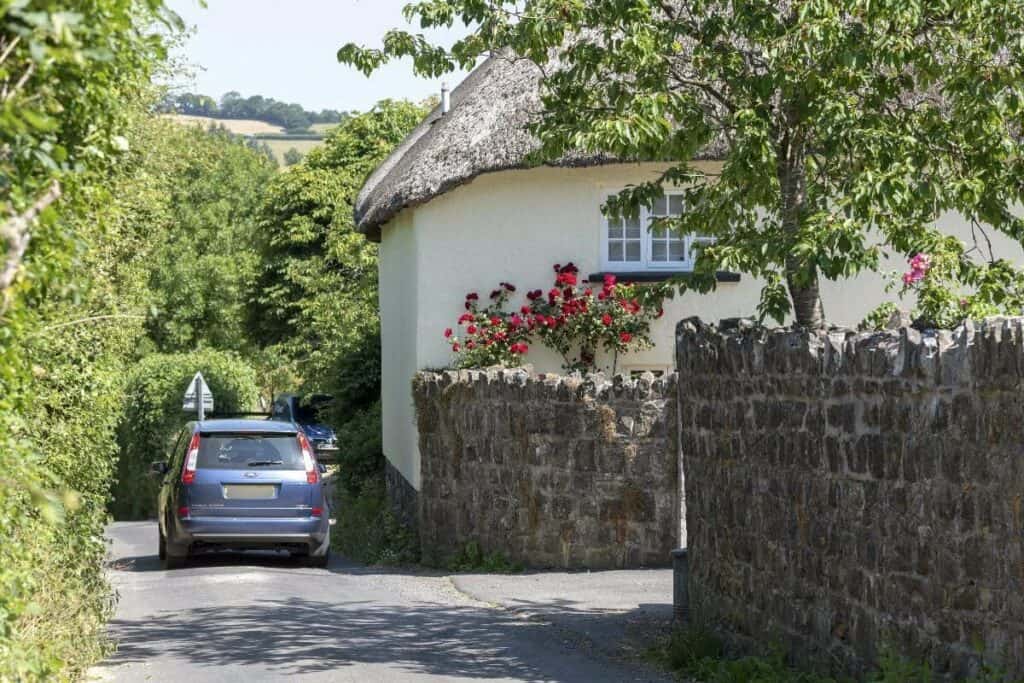
6) Narrow roads are normal (and yes, that includes towns)
Many UK roads were built long before cars were chunky SUVs.
You’ll often see:
- Parked cars on both sides
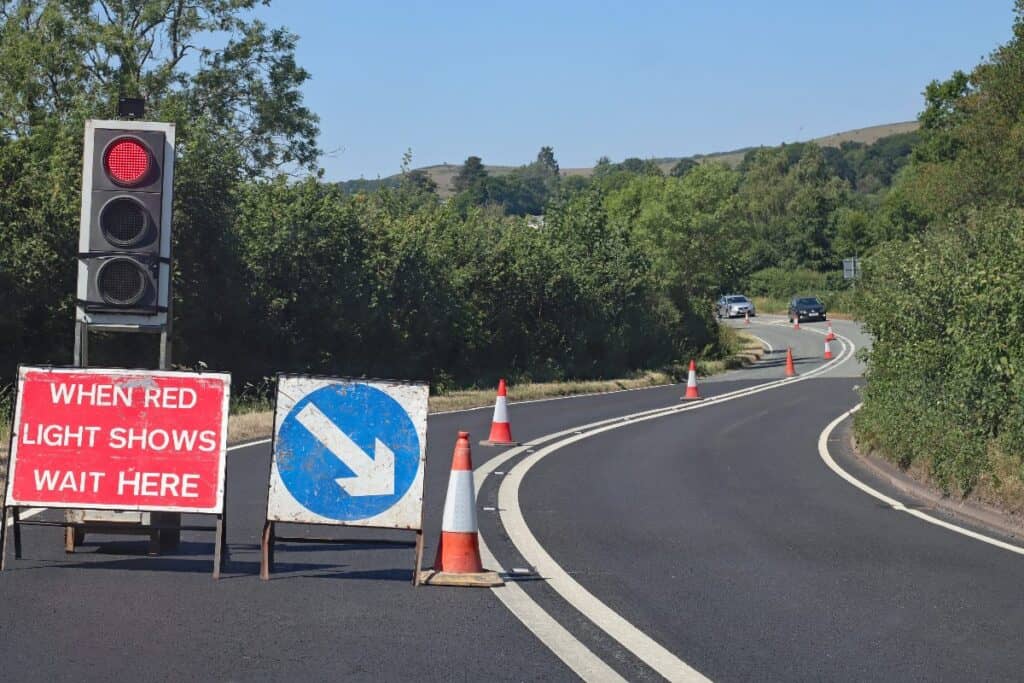
- Roads that become “one car wide”
- Tight corners with blind turns
Rule of thumb: slow down, make eye contact and be ready to pull into a safe gap to let someone pass.
7) Country lanes: passing places are your best friend
If you’re driving rurally (especially in parts of Wales, the North or Scotland), you’ll see passing places, which are little pull-ins so cars can pass each other on narrow lanes.
- Don’t park in them
- Use them to let others through
- If someone lets you pass, a quick thank-you wave is standard
8) Speed limits: learn the “national speed limit” basics
The UK uses mph (not km/h).
A few key bits:
- Built-up areas are often 30mph, but many areas are now 20mph (especially in Wales and around schools/residential zones) – always follow the local signs.
- The national speed limit sign doesn’t mean one fixed number – it means the default limit for that road type applies unless signs say otherwise.
Also: variable speed limits exist (especially on motorways). If the sign says 50, it means 50.
UK road sign translator (the ones that catch people out)
These four come up a lot – and they’re the ones visitors misread most often:
- National speed limit sign (white circle with a diagonal black stripe)
What it means: You’re now on the default national limit for that road type. For cars, it’s usually 60mph on single carriageways and 70mph on dual carriageways/motorways, unless signs say otherwise. - Give Way (upside-down, red rimmed triangle)
What it means: Slow down and be ready to stop – you must give priority to traffic on the main road / already on the roundabout. - Box junction (yellow criss-cross box at junctions)
What it means: Don’t enter unless your exit is clear. If you stop inside the box because traffic is stuck, you can be fined. - Double yellow lines
What it means: No waiting at any time (even if you “just pop in for one thing” – famous last words).
9) Speed cameras are… not rare
Assume you are being observed. Because you probably are.
There are fixed cameras, average-speed zones and mobile vans. It’s not personal, it’s just Britain’s love of rules, paperwork, fines for everything and consequences.
10) Motorways: keep left unless overtaking
- Left lane is your default
- Middle/right lanes are for overtaking
- Tailgating is frowned upon (and dangerous)
Merging from a slip road: match the speed, indicate and merge smoothly. Hesitation causes more drama than confidence.
11) Parking: towns can be an actual puzzle
UK parking can feel like a game designed to catch you out.
You’ll see:
- Pay & display machines
- Parking apps
- Residents-only zones
- Tiny spaces that require faith and three-point turns
If you’re visiting towns, multi-storey car parks can be tight, so take it slow and don’t let someone behind you bully you into rushing.
12) Yellow lines explained (in plain English)
- Single yellow lines usually mean no waiting during certain times (check nearby signs/time plates).
- Double yellow lines generally mean no waiting at any time.
This is one of the biggest “oops” triggers for visitors, so always check signs and zone rules before you leave the car.
13) Can you drive in the UK on a US licence?
It depends on your situation (visitor vs resident etc.), so the safest route is: check the official GOV.UK guidance for driving in Great Britain on a non-GB licence (rules can vary by licence type and how long you’re staying).
14) Your car basics: tyres and new driver safety tech matter here
UK weather + potholes + wet roads = tyres matter more than people admit.
If you’re a newer driver (or buying your first car here), this is a great article to read: essential safety tech for new drivers.
If you’re learning in the UK (or feeling rusty), this one’s a solid read too: things to consider when choosing a driving school.
15) The “first drive” checklist (save this)
Before you set off:
- Set sat nav (and don’t be afraid to ignore it if it tells you to turn into a hedge)
- Remind yourself: centre line stays on my right
- Practise one or two quiet roundabouts first
- Keep left on motorways unless overtaking
- Expect narrow roads and parked cars everywhere
- Don’t queue jump at merges (take turns)
- If you miss your exit: go around again, no drama
- Assume speed limits are in mph and watch for variable signs
The “Wait… so what does that mean?” driving edition
Is driving in the UK hard for Americans?
It’s mostly a habit change. The biggest adjustments are driving on the left, roundabouts and narrow roads/parking, but you adapt quickly if you start on quieter roads.
What’s the hardest part of driving in the UK for the first time?
Roundabouts + narrow roads with parked cars + parking rules in older towns.
Is British driving aggressive?
Usually not. Most drivers are courteous, but people don’t love queue jumpers, and a beep often translates to “wake up” or “oi.”
What does the national speed limit sign mean?
It means the default limit applies for that road type unless signs say otherwise – typically 60mph (single carriageways) and 70mph (dual carriageways/motorways) for cars.
Can I park on yellow lines?
Yellow lines mean restrictions. Double yellows generally mean no waiting at any time. Single yellows depend on the times shown on nearby signs.
H3: New to the UK? Start here
If you’re in your “learning Britain” era, these will save you a lot of confusion (and at least one awkward conversation):
- New here? Start with this moving guide: Americans moving to England: 8 things to know before you move
- British understatement translator: what Brits say vs what we really mean
- Funny British sayings: meanings, origins + where they’re from
- British food names explained and what they actually mean
- How to dress for British weather – without carrying your whole wardrobe around
- British etiquette rules people don’t see coming
Wrap-up
Driving in the UK isn’t “hard,” it’s just different and the first few drives can feel like your brain is running a software update.
Start small, treat roundabouts like a skill you can practise (because you can), don’t rush and remember: most people will give you space if you’re steady and predictable.
And if someone beeps? It’s probably not war. It’s just Britain saying, politely-ish: “Go on then.”

I don’t think I could ever adjust to driving on the left side of the road. It seems so unnatural to me.
Oh I wish that was how we used horns in the US! I mean, I don’t use mine; in fact the last time I needed to use it (to let a car know I was in the lane they were trying to turn into) I couldn’t figure out where to push to get it to work! We have lots of roundabouts in New England but most are only one lane and we all have to give way to those already in the roundabout.
I learnt to drive in the UK and now live in a country where we drive on the right. I really don’t find it at all difficult to make the switch whenever I return to the UK. People think it’s an issue, but it’s not to me!
It is very easy to switch over – I expect roads are much better quality elsewhere at the moment, the UK is pot-hole central right now, so swerving is the norm! 😉 Thank you for commenting Lisa!xx