
To dry clothes indoors without causing damp, keep the washing in one room, close the door and give the moisture somewhere to go with ventilation or a dehumidifier. Use a good spin cycle first, leave space between clothes on the airer and avoid covering radiators with wet washing.
Drying laundry indoors releases a surprising amount of moisture into the air, which is why windows can suddenly start misting up once the weather turns and the washing comes inside.
The aim is not to stop drying clothes indoors altogether. It is to stop all that moisture becoming trapped in your home.
Affiliate disclosure: This post contains Amazon affiliate links. If you buy through them, I may earn a small commission at no extra cost to you. As an Amazon Associate I earn from qualifying purchases.
Does Drying Clothes Indoors Cause Damp?
It can contribute to damp if the extra moisture has nowhere to go.
As wet clothes dry, water evaporates into the air. When that warm, moist air hits colder surfaces such as windows and outside walls, it can turn into condensation.
If those surfaces stay damp regularly, mould can eventually develop.
Drying washing indoors does not automatically cause a damp problem. Good ventilation and moisture control make a huge difference.
Dry Clothes in One Room
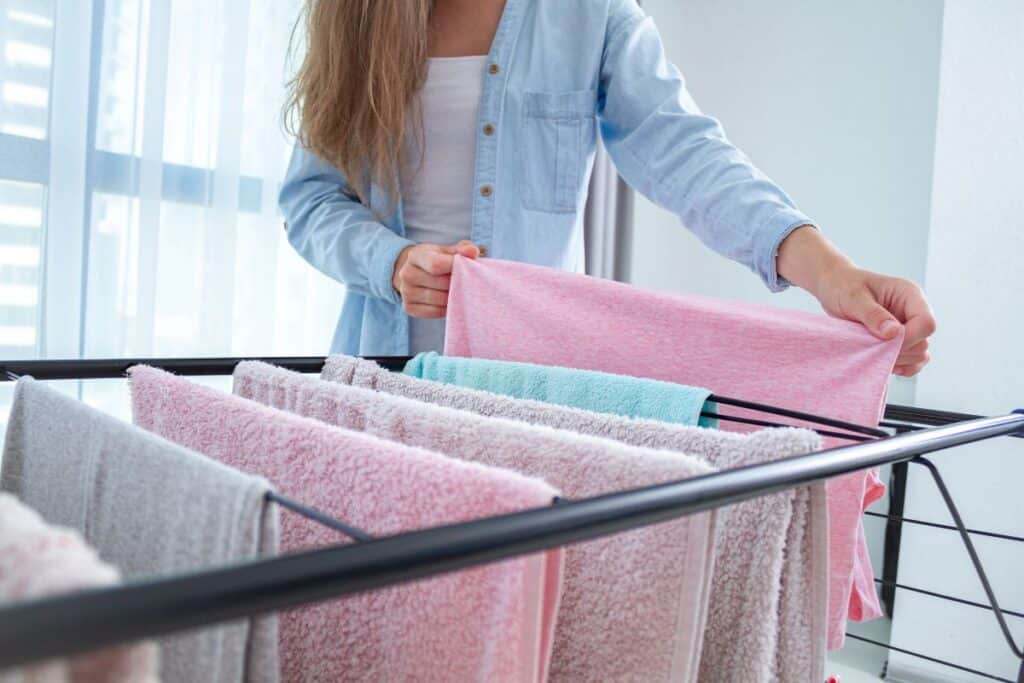
Rather than having wet washing spread around the house, choose one room for drying it whenever you can.
Put the clothes on an airer, close the door and either:
- open a window slightly
- use an extractor fan
- run a dehumidifier
Keeping the door shut helps stop the humid air moving into bedrooms and other colder parts of the house.
If your windows are already getting wet every morning, my guide to how to stop condensation on windows explains why it happens and how to deal with it.
Should You Open a Window When Drying Clothes Indoors?
If you are not using a dehumidifier, some ventilation is usually a good idea.
You do not need every window in the house wide open for hours. The important thing is giving moisture a way out of the room where the washing is drying.
A slightly open window, trickle vent or working extractor fan can all help.
Use a Good Spin Cycle First
The less water left in your clothes when they come out of the washing machine, the less moisture has to evaporate into your home.
If the fabric allows it, use a faster spin speed or run an extra spin before putting the washing on the airer.
This can also help clothes dry noticeably faster.
Give Clothes Space on the Airer
Avoid packing wet clothes tightly together.
Leave gaps between items so air can move around them and spread out thicker clothes such as jeans, hoodies and towels.
If clothing is bunched together, it takes longer to dry and spends longer releasing moisture into the room.
Turning heavier items partway through can help too.
Is It Bad to Dry Clothes on Radiators?
I would avoid covering radiators with wet washing where possible.
The clothes may feel as though they are drying quickly, but all that water is still being released into the room.
You are also covering part of the radiator, which can stop it warming the room as effectively.
An airer positioned nearby is a better option.
If heating costs are on your mind too, my guide to how to save money on heating covers thermostat settings, radiators and simple ways to reduce wasted heat.
Does a Dehumidifier Help Dry Clothes?
Yes.
A dehumidifier removes moisture from the air, so it can help washing dry more quickly while also reducing the humidity left behind in the room.
A simple setup is:
- Put the airer in one room.
- Close the door.
- Leave space between the clothes.
- Run the dehumidifier nearby.
If you are using a dehumidifier, keep the window closed while it is running so the machine is working on the air inside the room rather than constantly pulling in more moist air from outside.
Dry washing indoors regularly? A dehumidifier can help remove moisture from the room while your clothes dry. You can see dehumidifiers on Amazon UK here.
Does a Heated Airer Stop Damp?
No.
A heated airer can help clothes dry faster, but it does not remove the moisture from the room.
The water still evaporates into the air, so you still need ventilation or a dehumidifier if condensation is a problem.
That is the important difference: a heated airer speeds up drying, while a dehumidifier actually removes moisture from the air.
Want to speed up indoor drying? A heated airer can help clothes dry faster, although you will still need to manage the moisture in the room. You can see heated airers on Amazon UK here.
Where Is the Best Place to Dry Clothes Indoors?
Choose somewhere where you can control both airflow and moisture.
A utility room, bathroom with a good extractor fan or spare room with a window can all work well.
I would avoid drying large loads in bedrooms if possible, particularly overnight, because sleeping already adds moisture to the air.
Can Drying Clothes Indoors Cause Mould?
It can contribute to mould if high humidity and condensation are allowed to build up repeatedly.
Wet windows, damp corners and a persistent musty smell are signs that there is too much moisture hanging around.
However, do not automatically blame your washing for every damp patch.
Leaks, poor insulation, penetrating damp and other building problems can also cause damp and mould. If the problem continues despite good ventilation and moisture control, it is worth investigating further.
For more general advice on heat loss and moisture around the home, these ways to make your home more energy efficient are also worth a read.
The Easiest Way to Dry Washing Indoors
If you want to keep it simple:
- Give the washing a good spin.
- Use one room rather than spreading it around the house.
- Leave space between clothes on the airer.
- Shut the room door.
- Ventilate the room or use a dehumidifier.
- Avoid covering radiators.
- Deal with any condensation rather than leaving windows wet.
The important bit is not just getting the clothes dry.
It is making sure the water coming out of them does not stay trapped inside your home.
That way you can dry washing indoors through a wet British winter without turning your windows, walls and corners into a condensation problem.
