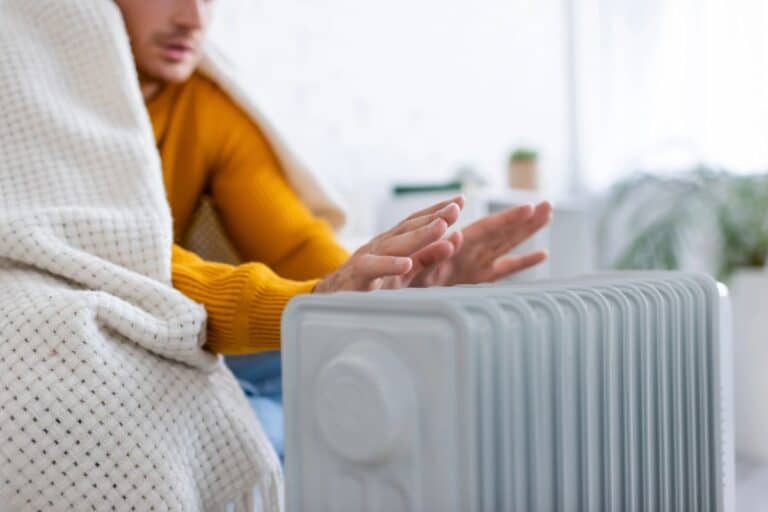
You can save money on heating without making your home miserable. The biggest wins are usually simple: lower the thermostat slightly, only heat the rooms you use, set your heating around your routine and stop warmth escaping unnecessarily.
For most households, a thermostat setting somewhere around 18°C to 21°C is a sensible range, with the aim being the lowest temperature that still feels comfortable.
The goal is not to sit there freezing. It is to stop paying for heat you do not need.
Turn the Thermostat Down Slightly
If your thermostat normally sits at 22°C, try 21°C and see how the house feels.
A one-degree drop is far more realistic than suddenly deciding everyone can cope at 17°C.
Also, turning the thermostat right up does not make the house warm faster. It simply keeps the heating running until the room reaches a higher temperature.
Use Your Heating Timer Properly
There is little point heating an empty house.
Set the heating around the times people are actually home rather than letting it run for hours out of habit.
If everyone leaves for work, school or college during the day, check whether your current schedule still makes sense.
This is a useful job to include in an autumn reset before winter, along with checking draughts and making sure the heating is working properly.
Is It Cheaper to Leave the Heating on All Day?
If you have a standard boiler, generally no.
Heating the house when you need it is usually more efficient than leaving it running constantly.
Heat pumps work differently, so advice depends on the system you have.
That is why I would always check the guidance for your own heating setup rather than following a blanket rule from social media.
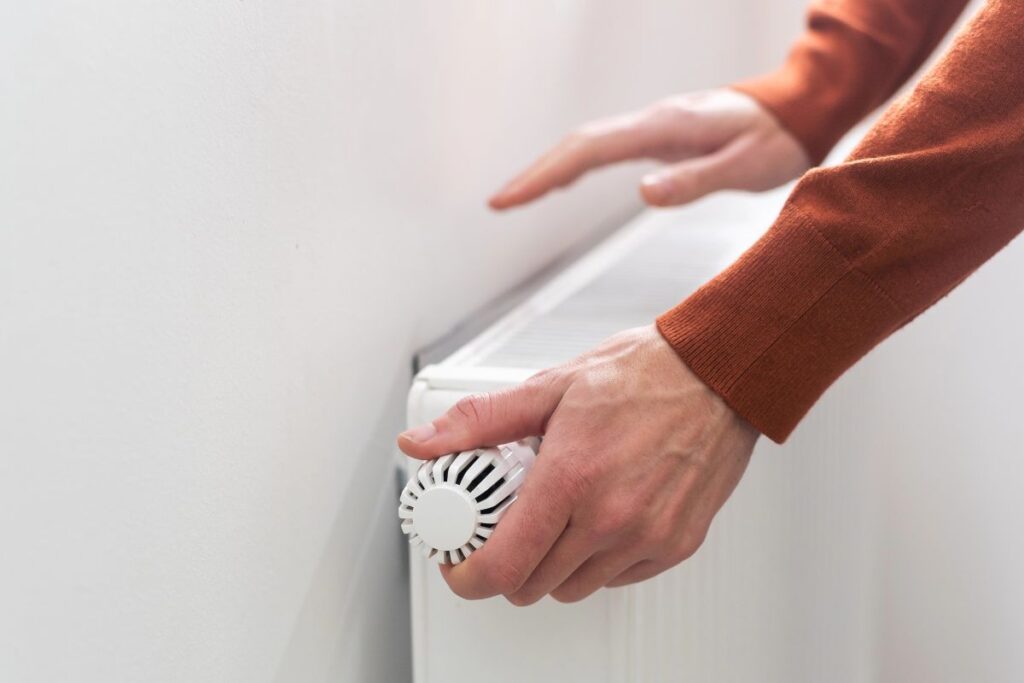
Turn Down Radiators in Rooms You Use Less
Not every room needs to be the same temperature.
Thermostatic radiator valves can help you keep the rooms you use most comfortable while turning the temperature down in spare bedrooms, hallways or other less-used spaces.
There is little point making an empty room tropical.
Put Reflective Foil Behind Radiators
This is one tip I have used for years.
I put reflective foil behind radiators, particularly those sitting against external walls, to help bounce some of the heat back into the room instead of losing it into a cold wall.
I actually mentioned this tip in a newspaper article a few years ago (I know, check me out!) and I still stick by the principle now.
If you are buying something specifically for the job today, I would go for purpose-made radiator reflector foil or panels rather than ordinary kitchen foil.
They are designed for the job and make most sense behind radiators on colder external walls.
For more simple ideas like this, my guide to cost-effective ways to keep your house warm has more practical ways to make the heat you are paying for go further.
Stop Heat Escaping
Once the house is warm, try to keep that warmth inside.
A few simple habits can help:
- close curtains once it gets dark
- use draught excluders around external doors
- check obvious gaps around windows
- avoid blocking radiators with furniture
- shut doors between warmer and cooler rooms
None of these are revolutionary, but together they can reduce how quickly heat disappears.
If your home loses heat quickly, it is also worth looking at these ways to make your home more energy efficient.
Check Your Boiler Settings
If you have a combi boiler, it may be worth checking the flow temperature rather than leaving everything at the factory setting forever.
Do not start changing settings blindly, though.
Heating systems vary, so check the manufacturer’s guidance or speak to a qualified heating engineer if you are unsure.
It is also worth keeping up with boiler servicing so the system is working properly and efficiently.
How to Keep Your House Warm Without Turning the Heating Up
Sometimes the heating genuinely needs to go on.
Other times, a few small things can make the room feel warmer without immediately turning the thermostat higher.
Close the curtains, shut the door, add another layer or grab a throw.
That does not mean sitting there shivering to save 37p.
If you are cold, put the heating on.
The point is simply to use it deliberately rather than automatically.
If you live in an older property, my guide to keeping an old house warm is worth a read too, because draughts and heat loss can make heating much harder work.
What Actually Helps Cut Heating Costs?
Saving money on heating is usually less about one clever hack and more about making a few sensible changes at the same time.
Lower the thermostat slightly, heat the rooms you actually use, set the timer around your routine and stop heat escaping where you can.
That is how you cut waste without making the house uncomfortable.
For more detailed advice on heating controls and thermostat settings, the Energy Saving Trust is a useful reference.
