Updated November 2026
The cheapest way to keep your house warmer is to stop the heat you already pay for from escaping. Start with draughts around windows and doors, use curtains properly, make sure radiators can heat the room effectively and check whether your loft insulation needs attention.
You do not need to tackle everything at once either. Some of the most useful changes cost very little, while bigger improvements can be planned when your budget allows.
If reducing energy use across the whole house is the bigger goal, these ways to make your home more energy efficient are a good place to start.
Stop Cold Draughts Around Windows and Doors
A draught can make a room feel cold even when the heating is running.
Check around:
- Window frames
- External doors
- Letterboxes
- Keyholes
- Gaps around skirting boards
- Loft hatches
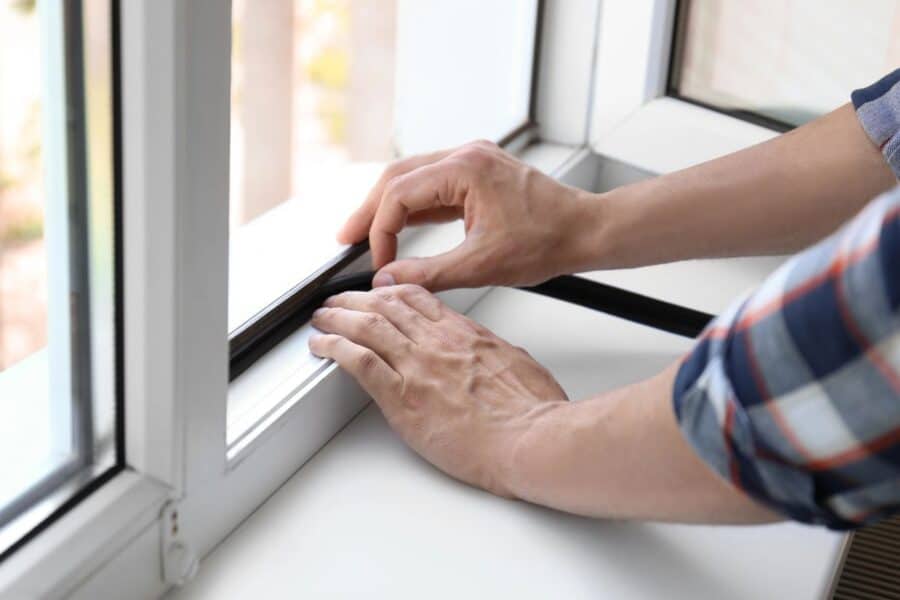
Self-adhesive draught-proofing strips are inexpensive and can make a noticeable difference around older windows and doors.
A simple door draught excluder can also stop cold air creeping underneath an external door.
There is an important difference between an unwanted draught and ventilation, though. Do not block trickle vents, air bricks or other ventilation designed to let fresh air into your home.
If wet windows are part of the problem, sealing every gap can make moisture worse. My guide to stopping condensation on windows explains how to balance warmth with the ventilation your home still needs.
Check Your Loft Insulation
If your loft is poorly insulated, heat can escape through the roof instead of staying in the rooms below.
That makes loft insulation one of the bigger jobs worth checking if your home constantly feels cold.
Before buying anything, look at what is already there. Older insulation may be too thin, compressed or damaged and could need topping up or replacing.
Some straightforward lofts can be insulated as a DIY job, but damp, awkward access or a converted loft can make professional advice the better option.
My guide to insulating your home to reduce energy loss covers the wider areas worth checking if you suspect your home is losing heat.
Use Your Curtains to Keep Heat In
Curtains are an easy win, particularly around older or draughtier windows.
Open them during daylight hours when the sun is warming the room, then close them as it gets dark to help reduce heat loss through the glass.
Thicker curtains or thermal linings can be particularly useful in colder rooms.
Just make sure curtains are not hanging directly over a radiator. If they cover the radiator, some of the warmth can end up trapped behind the fabric and beside the window instead of circulating around the room.
If you are replacing window coverings anyway, this guide to choosing between curtains and blinds looks at the practical differences as well as how they work with your room.
Get More From the Radiators You Already Have
Before buying another heater, make sure your existing radiators can actually do their job.
Avoid putting large sofas directly in front of them and try not to cover them with furniture or long curtains.
If a radiator is cold at the top but warmer lower down, it may need bleeding. If several radiators are heating unevenly, the system may need checking or balancing.
For radiators fitted to uninsulated external walls, purpose-made radiator reflector panels can also help direct some of the heat back towards the room rather than into the wall. Ordinary kitchen foil is not the best solution, proper radiator reflector material is designed for the job and is inexpensive to buy.
If the bigger concern is how much the heating costs to run, my guide to saving money on heating without making your home freezing covers thermostats, timers and heating the rooms you actually use.
Deal With Cold Windows Without Replacing Them Immediately
New windows can make a difference, but replacing every window is hardly a budget fix.
Start with the cheaper options first.
Check seals around the frame, deal with obvious draughts and use curtains effectively.
Temporary secondary glazing film can provide another layer over single glazing during colder months, although it will not perform in the same way as properly installed double glazing.
Older sash windows need a little more thought because replacing them is not always desirable or practical. There are several energy-efficient ways to double glaze sash windows while keeping the character of the property.
Keep Internal Doors Closed Where It Helps
You do not necessarily need every room at exactly the same temperature.
Closing doors between warmer living areas and cooler hallways, spare rooms or unused spaces can help keep warmth where you actually need it.
This is particularly useful in homes with open staircases or draughty hallways where warm air quickly disappears elsewhere.
Do not shut rooms up completely if they need ventilation or are prone to damp. The aim is to control where heat goes, not create cold, stagnant spaces.
Make Sure Your Heating Controls Work for Your Routine
Keeping a house warm cheaply is not just about insulation.
It also means avoiding heating the house unnecessarily.
Use your programmer or timer so the heating comes on when you genuinely need it rather than running all day simply because that is how it has always been set.
Thermostatic radiator valves can also help you control individual rooms where fitted.
A bedroom may not need to be as warm as the living room in the evening, while a home office might need more heat during the day.
Small adjustments to when and where you heat can be much more useful than repeatedly turning the main thermostat up and down.
Older Houses Need a Slightly Different Approach
Period properties can be beautiful, but they can also come with solid walls, sash windows, open chimneys and plenty of mysterious little gaps where cold air appears from nowhere.
The answer is not always to seal everything as tightly as possible.
Older buildings may need more careful choices around insulation, ventilation and moisture, particularly if you want to retain original features.
If that sounds familiar, my separate guide to keeping an old house warm without losing its character covers the fixes that are particularly useful for period homes.
What Is the Cheapest Way to Make Your House Feel Warmer?
If you want to start without spending much, concentrate on draught-proofing, using curtains properly, keeping radiators clear and adding radiator reflector panels where they make sense.
Then look at the bigger causes of heat loss, particularly loft insulation and inefficient windows.
You do not need to turn your home upside down in one weekend.
Start with the coldest room, work out where the heat is escaping and fix the cheapest problems first.
Keeping your house warm is much easier when the warmth you are already paying for actually stays inside.
