
Most family traditions do not start with a grand plan. They start with something small, a Saturday morning routine that nobody wants to break, a meal that becomes the one everyone requests, a phrase that gets repeated so often it becomes part of your family’s private language. Before you know it, it is just what you do. And years later, it is what you miss most when it is gone.
The traditions that last are rarely the expensive or elaborate ones. They are the ones with low barriers, real warmth and enough flexibility to grow as your family does. If you have been thinking about building stronger rituals in your household or wondering how to breathe new life into ones that have faded, this is where to start.
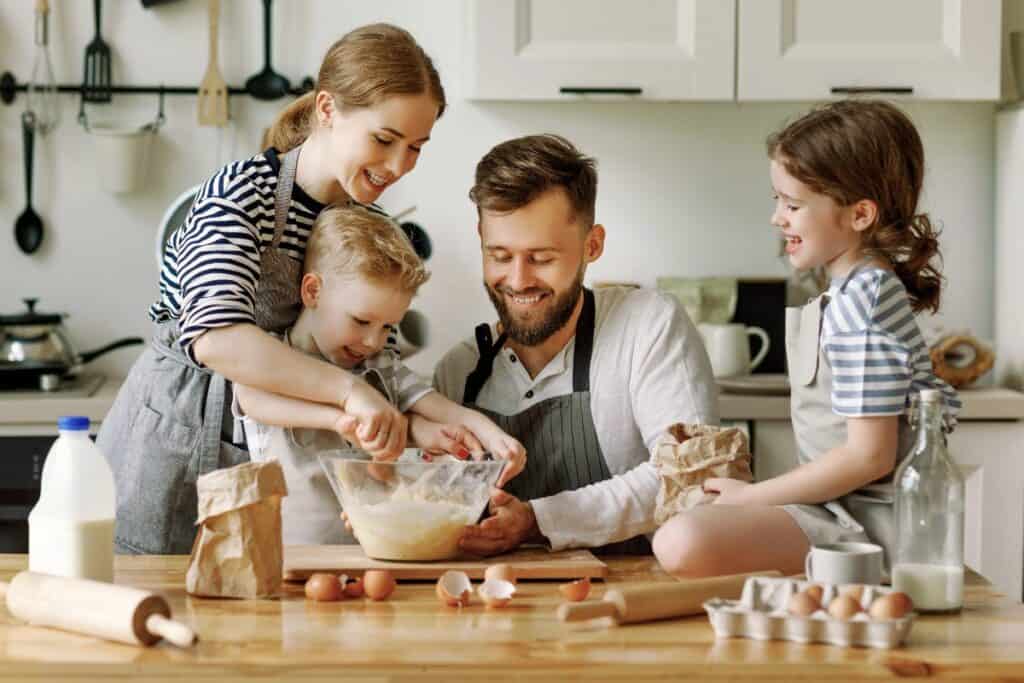
Why family traditions matter more than we give them credit for
There is a reason certain memories from childhood stick with you decades later while others disappear completely. The ones that stay tend to be the repeated ones, from the rituals, the rhythms, the things that happened reliably year after year and told you, without words, that this is who we are.
For children especially, traditions create what psychologists call a stable emotional anchor. When the outside world feels uncertain or overwhelming, the predictability of a familiar ritual provides genuine comfort. Not because it is magical, but because it is consistent. It says: this still happens. We are still us.
But traditions are not only for children. Adults carry them forward too, often without realising how much they rely on them until life changes and the ritual disappears. That is why building them intentionally, rather than hoping they happen by accident, is one of the most quietly powerful things a family can do.
The traditions that shape us most are rarely the grand occasions. They are the small, repeated moments that tell us who we belong to.
Start smaller than you think you need to
The biggest mistake people make when trying to create new traditions is starting too big. A weekly family dinner sounds lovely until week three when someone has football practice, someone else is exhausted and the whole thing collapses under the weight of its own ambition.
The most sustainable traditions are the ones with the lowest barrier to entry. Taco Tuesday works because it is just a Tuesday. A monthly board game night works because it needs nothing more than an evening and a box from the cupboard. A Sunday morning walk works because it costs nothing and asks very little.
Start with something you could realistically do even on a difficult week. If it survives the tired weeks and the busy seasons, it becomes a tradition. If it only happens when everything aligns perfectly, it stays a nice idea.
A tradition is not something you do when life is easy. It is something you do especially when it is not.
If you are looking for easy starting points, our post on no-prep indoor activities for families has plenty of ideas that could easily become regular rituals without any planning or cost.

Let the ordinary become the ritual
You do not need to invent something new. Some of the best traditions are simply ordinary moments that someone decided to take seriously.
The drive home from school is a tradition waiting to happen, a standing question, a shared playlist, a silly game that only your family plays. The way you mark the end of the school week, the thing you always do on the first day of a new season, the meal that appears every birthday without fail. None of these require planning. They just require noticing what already works and doing it again on purpose.
This is also where celebration culture comes in. Marking small wins, ordinary milestones and quiet moments of joy is something many families underestimate. Our post on celebration culture at home is a lovely read alongside this one if you want ideas for making everyday moments feel more intentional.
The unexpected power of heirlooms and physical objects
Shared experiences are wonderful, but they fade. A meal, a game, an afternoon in the park, these are felt in the moment and remembered imperfectly over time. Physical objects work differently. They sit in a drawer or on a shelf and carry the memory forward intact, without any effort from you.
This is why heirlooms hold such an unusual place in family life. They are not just objects. They are evidence – proof that someone loved someone, that a moment happened, that a family existed in a particular way at a particular time.
For many families, this begins with the very first significant piece, the one that starts the story. When choosing a unique vintage engagement ring to start a family legacy, you are doing more than selecting a piece of jewellery. You are choosing something with history already built into it, a character that mass-produced pieces simply cannot replicate and a longevity that means it can genuinely be passed down.
A vintage ring does not just mark the beginning of a relationship, it becomes the first chapter of a longer story that younger generations can one day hold in their hands.
The same thinking applies to anything you choose to keep and pass on intentionally, a piece of furniture, a recipe written in someone’s handwriting, a piece of jewellery that reappears at every important occasion. Our post on great investments for your family legacy explores this idea further if you want to think about what is worth holding onto and why.
A physical object carries memory forward without any effort from you. That is something no photograph or story can quite replicate.

Connecting the present to the past
Some of the richest traditions a family can build are the ones that reach backwards as well as forward, the ones that bring older generations into the room, even when they are no longer there.
Cooking a grandparent’s recipe. Telling the same story every Christmas. Visiting a place that meant something to someone before you. These rituals do not just create belonging, they create continuity. They remind everyone at the table that they are part of something longer than their own lifetime.
If you have older relatives who could share their memories while they still can, that is one of the most valuable traditions you could possibly start. Our guide to tracing your family history with the whole family is a wonderful starting point for turning those conversations into something the whole family can be part of.
The most meaningful traditions connect the people who are here now to the ones who came before. That thread is worth protecting.
Capture it while it is happening
Memories feel permanent in the moment. They are not. The specific texture of a particular Christmas morning, the exact words of a joke that made everyone cry laughing, the look on someone’s face at an important milestone, these details slip away faster than we expect.
You do not need to be a dedicated archivist to preserve them. A shared photo album where everyone adds one image after a significant event. A simple family journal where someone writes a single sentence about what happened. A voice note saved after a conversation with a grandparent. Small, consistent efforts compound over years into something genuinely precious.
Our post on using a photo storage memory system has practical guidance on how to do this without it becoming a project. And if your family is spread across different places, our guide to live streaming family milestones covers how to keep everyone included even when you cannot be together in person.
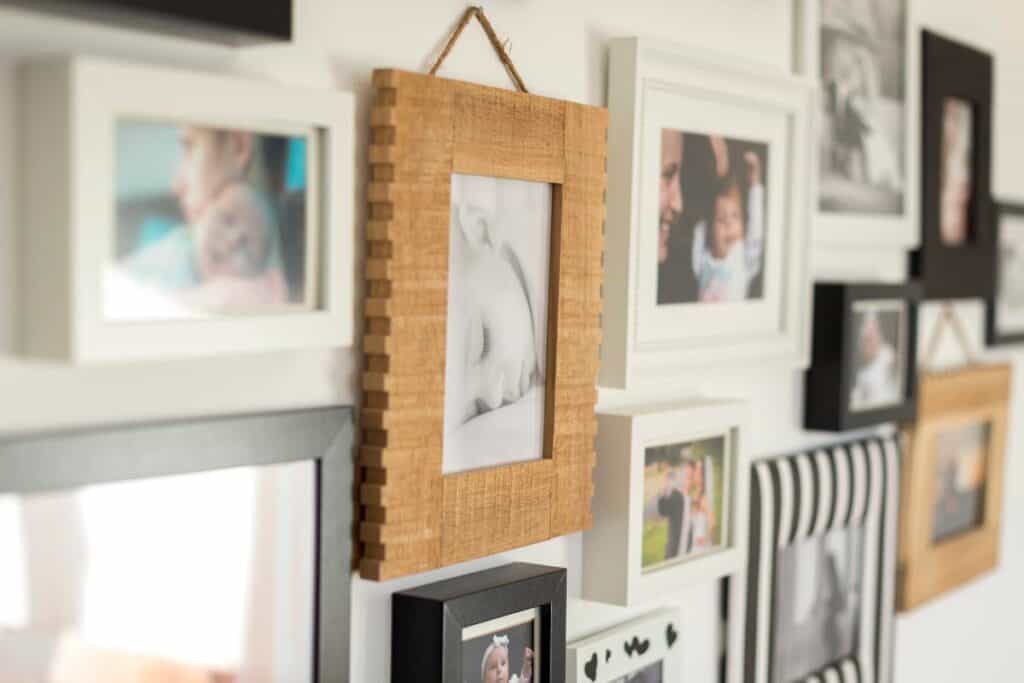
A family memory wall is another beautiful way to make this visible in your home every day, not tucked away in a folder or a phone, but on display as a daily reminder of what matters. Our guide to creating a family memory wall walks you through exactly how to create one.
Let traditions grow and change
One of the most common reasons family traditions fade is rigidity. The tradition that worked perfectly when children were small starts to feel forced as they become teenagers and instead of adapting it, families often just quietly drop it, which feels like a small loss every time.
The traditions that survive decades are the ones with enough flexibility to evolve. A childhood tradition of writing letters to Father Christmas can become a teenage tradition of doing a Secret Santa with a charity element. A family film night that always showed animated films can shift to a standing Friday night film pick where everyone takes a turn choosing. The ritual stays. The content grows.
Review your traditions every few years with an open mind. Ask everyone what they still love, what feels tired and what they wish existed. The families who do this tend to build something that genuinely carries forward, because everyone in the family has had a hand in shaping it.
Rigid traditions become resentments. Flexible ones become legacies.
Our post on ways to deepen family connections is worth reading alongside this one for ideas on keeping those conversations going as your family changes.
Seasonal traditions are the easiest place to start
If you are not sure where to begin, the calendar gives you a natural scaffold. Seasonal traditions are the easiest to establish because the occasion itself provides the prompt, you do not have to remember to do them, the time of year reminds you.
Christmas Eve is one of the richest opportunities for this. Our post on Christmas Eve traditions in the UK to start this year is full of ideas for rituals that families return to year after year. But the same principle applies to every season, the first bonfire night together, the annual summer picnic spot, the autumn walk that always ends the same way.
Start with one. Do it again next year. That is all a tradition requires to begin.
Quick ways to start building family traditions today
You do not need a special occasion or a big plan. Here are places to start this week:
- Pick one meal to repeat weekly. It does not need to be elaborate, just consistent. The repetition is what creates the ritual.
- Start a question tradition. One standing question at dinner, on the school run or at bedtime that everyone answers. It takes thirty seconds and builds a habit of connection.
- Choose something to mark the seasons. A walk, a meal, a film, something that signals the shift from one part of the year to the next.
- Dig out an old family recipe. Make it together, write down the method in someone’s handwriting, and decide it is yours now.
- Create one physical keepsake this year. A photo book, a memory jar, a written account of something that happened. Future you will be grateful.
- Ask an older relative something you do not know. Record the answer somehow. That conversation is a tradition waiting to be born.
Frequently asked questions about family traditions
How do you start a family tradition from scratch? The simplest way is to do something enjoyable once, then do it again deliberately. Most traditions begin as happy accidents – the key is noticing when something feels good and committing to repeating it. Start small, keep it low-barrier and let it build naturally over time.
What makes a family tradition actually last? Traditions that last tend to have three things in common: they are easy enough to maintain during difficult periods, flexible enough to evolve as the family grows and meaningful enough that people genuinely miss them when they are skipped. Grand, expensive traditions rarely outlast simple, consistent ones.
How do you keep family traditions going as children get older? Adapt rather than abandon. Talk openly about what still feels meaningful and what has been outgrown. Involve teenagers in reshaping traditions rather than imposing them – a tradition that a young person has had a hand in creating is one they are far more likely to carry forward into their own adult life.
Is it too late to start family traditions? It is never too late. Traditions can begin at any stage of family life, when children are small, when they are teenagers, when they have left home, or even when you are building a new family of your own. The best time to start is now, and the second best time is next week.
How Traditions Become Part of Your Family Story
Family traditions are not about perfection or Pinterest boards or getting everything right. They are about showing up, reliably, in ways that tell the people you love that they belong somewhere. That there is a us and this is what we do.
The small things are the ones that last. The Sunday morning ritual, the meal that appears every birthday, the phrase that makes everyone laugh. These are the threads that hold a family together across years and distance and change.
Start with one. Keep it simple. Do it again.
